April 11th, 2018

Your teeth are precious. Once your permanent teeth come in, they need to last you a lifetime. Extensive tooth decay can lead to dental caries and the need for fillings, crowns, bridges, and dentures.
While these fixes can go a long way toward maintaining your quality of life, they cannot compare to your natural teeth. Getting braces is no excuse to let up on your thorough oral health routine: You need to take good care of your teeth before, during, and after braces to benefit completely from the gains you get from newly straightened teeth.
Why You Should Maintain Good Oral Health for Life
Begin a complete oral health regimen as early as possible in life, and maintain this routine throughout your life. Keeping your (or your child’s baby) teeth clean establishes a routine. It preserves healthy baby teeth whose function is to save space for the permanent teeth when they are ready to come in. Care of your permanent teeth helps preserve the enamel and prevent decay.
Take Special Care with Braces
It is important to pay attention to oral health when you have braces. If you do not take special care of your teeth during the months or years that you have braces, you risk irreversible damage to your teeth. Care is more difficult with braces because food can easily get stuck. In addition to brushing twice daily and flossing each day, Dr. Nathan R. Yetter and our staff suggest avoiding sticky foods.
April 4th, 2018
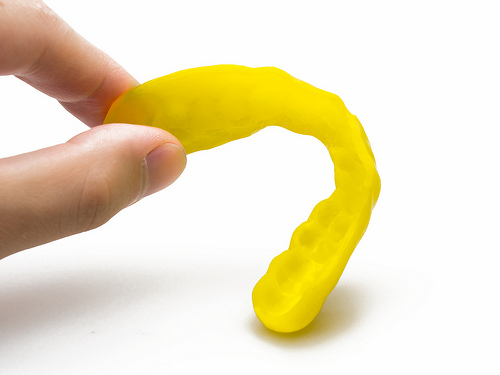
It's springtime and it's again time to remind our patients at East Valley Orthodontics to protect their faces and pearly whites while out on the field playing sports. According to the National Youth Sports Safety Foundation, children, high-school athletes and adults have more than 5,000,000 teeth knocked out in sporting events annually.
If you are planning on participating in spring sports, it’s imperative to have a proper-fitting mouthguard. Mouthguards can prevent chipped or broken teeth, lip and cheek injuries, jaw fractures, mouth lacerations and even concussions.
Having a mouthguard can make the difference between losing your teeth or not, and because many of our patients who play high school sports have jaws that are still growing, last year’s mouthguard may no longer fit as it should. Dr. Nathan R. Yetter and our team at East Valley Orthodontics can fit you for a new guard.
To learn more about mouthguards or for general questions about your treatment at our Mesa office, please give us a call!
March 28th, 2018
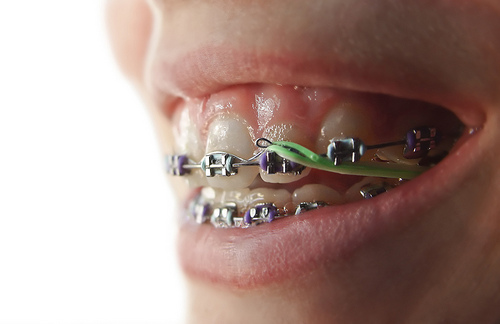
Most of our patients at East Valley Orthodontics will need to wear rubber bands at some point during their orthodontic treatment. The main reason our patients are instructed to wear rubber bands is to correct their bite. If your teeth do not fit together properly, Dr. Nathan R. Yetter will recommend that rubber bands be used. Dr. Nathan R. Yetter may also recommend using rubber bands to close or open spaces.
Rubber bands are a critical part of your treatment, and wearing them as Dr. Nathan R. Yetter and our team recommend will help move your teeth into the desired position. Dr. Nathan R. Yetter may ask you to wear your rubber bands full time, meaning that they should only be taken out when you brush and floss your teeth three times a day. Other times, you may be asked to only wear them part-time, like only during the day or only during sleep.
If you still have any questions about orthodontic rubber bands, we invite you to give us a call or ask us during your next adjustment appointment. Remember, wearing rubber bands as prescribed by Dr. Nathan R. Yetter is an important step during your treatment, and can reduce the time you have your braces. If you lose your rubber bands or run out, stop by our Mesa office and pick up more!
March 21st, 2018

Parents usually have numerous questions about orthodontic treatment for their children. According to the American Association of Orthodontists, orthodontic treatment for children should start at around seven years of age. This allows Dr. Nathan R. Yetter to evaluate the child’s existing and incoming teeth to determine whether or not early treatment might be necessary.
What is early orthodontic treatment?
Early orthodontic treatment, known as Phase One, usually begins when the child is eight or nine years old. The goal is to correct bite problems such as an underbite as well as guide the jaw’s growth pattern. It also helps to make room in the mouth for the permanent teeth to be properly placed as they come in. This will greatly reduce the risk of the child needing extractions later in life due to his or her teeth getting crowded.
Does your child need early orthodontic treatment?
There are several ways that you can determine whether your child needs early treatment. If you observe any of these characteristics or behaviors, you should talk to Dr. Nathan R. Yetter.
- Early loss of baby teeth (before age five)
- Late loss of baby teeth (after age five or six)
- The child’s teeth do not meet properly or at all
- The child is a mouth breather
- Front teeth are crowded (you won’t see this until the child is about seven or eight)
- Protruding teeth, typically in the front
- Biting or chewing difficulties
- A speech impediment
- The child’s jaw shifts when he or she opens or closes the mouth
- The child is older than five years and still sucks a thumb
What are the benefits of seeking orthodontic treatment early?
Early orthodontic treatment is begun while the child’s jaw bones are still soft. They do not harden until the children reach their late teens. Because the bones are still pliable, corrective procedures such as braces work faster than they do for adults.
In short, early treatment at our Mesa office often allows your child to avoid lengthy procedures, extraction, and surgery in adulthood. Early treatment is an effective preventive measure that lays the foundation for a healthy, stable mouth in adulthood.





 Website Powered by Sesame 24-7™